Main menu


You are here
Kamloops and Area Amateur Radio Repeaters
VE7RLO 147.320+ Mt. Lolo

- 147.320 + 600 Mt. Lolo voting repeater (5700' ASL)
- AllStarLink repeater node 520530
- For current status and information on the VE7RLO repeater see http://allstar.karc.ca
- To listen to the repeater on your phone or computer, click this link to play (please note there is 1-2 minute delay before the audio from the repeater streams to your computer, so please be patient)
- VoIP Autopatch (available to KARC members)
- Linked to the SIRG network
- APRS Tx/Rx iGate 144.390 Mhz
- Microwave linked to the KARC Broadband Network
This repeater uses a VoIP voting system. Three VHF receivers are located on Mt. Lolo, Greenstone Mtn, and Mt Dufferin. The repeater software selects the remote receiver with the best signal to noise ratio and feeds that signal to the 100W VHF transmitter on Mt. Lolo.
To see which VHF receiver is voting your signal click here
VE7RLO DTMF link codes

- *571 to turn the link to the SIRG Network ON (default is ON)
- *570 to turn the link to the SIRG Network OFF
- *81 to announce the current time
To connect to another AllStar node:
Enter *3##### where # is the AllStar node number you wish to connect (e.g. *328050)
To disconnect from an AllStar node.
Enter *1##### where # is the AllStar node number you wish to disconnect (e.g. *128050)
Or use *10 to disconnect the last connected node.
For a world map of all the available Allstar Nodes click here
Pictures of the VE7RLO repeater and remote sites can be found here
VE7RLO 442.525+ PL100 Mt. Dufferin

To connect to another AllStar node:
Enter *3##### where # is the AllStar node number you wish to connect (e.g. *328050)
To disconnect from an AllStar node.
Enter *1##### where # is the AllStar node number you wish to disconnect (e.g. *128050)
Or use *10 to disconnect the last connected node.
This UHF repeater is normally linked to the VE7RLO VHF voting repeater. It is ideal for people in town with UHF handheld radios, extending their reach by allowing them access to the extended coverage area of the VE7RLO repeater on Mt. Lolo.
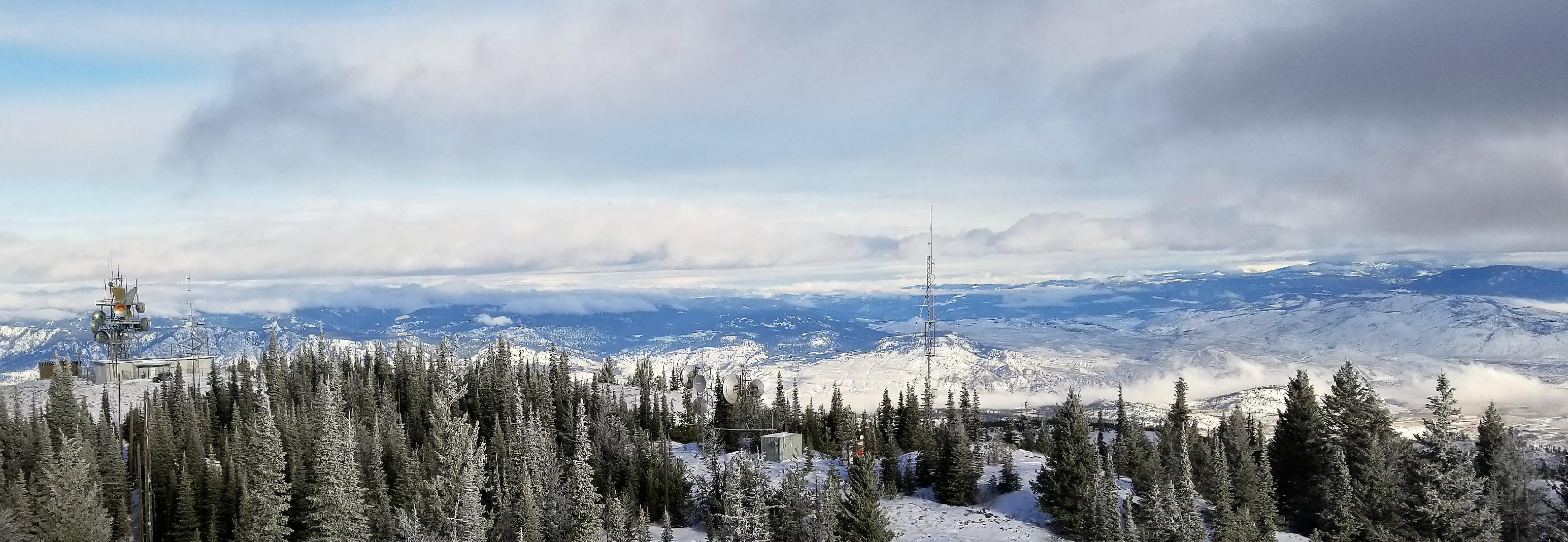
VE7RKA 146.960- Greenstone Mtn
Click here for Greenstone link codes and procedures.
Click here for a good guide on IRLP operating procedures.
Pictures of the VE7RKA repeater site can be found here
VE7FUS 448.525- FUSION
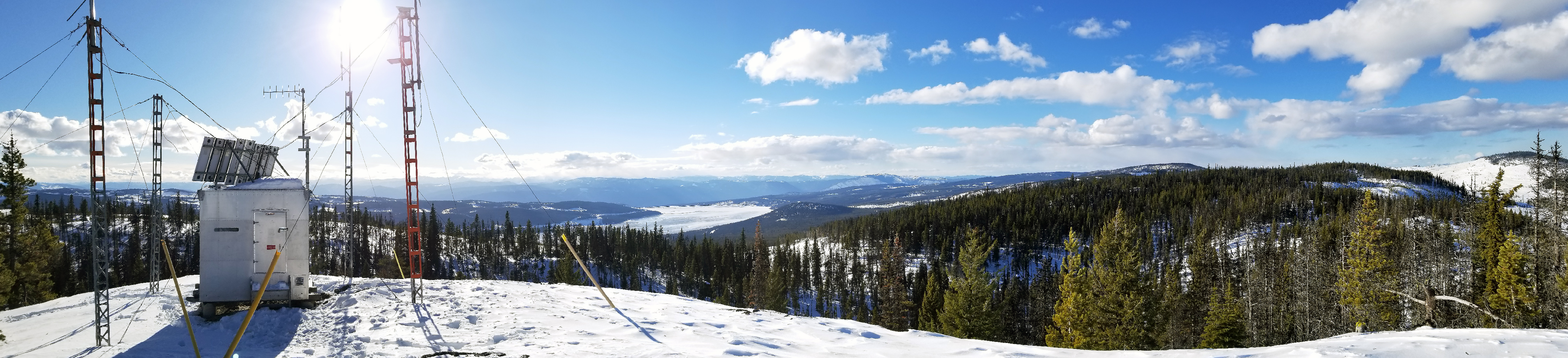
VE7LGN 147.100+ South Forge Mtn
To connect to another AllStar node:
Enter *3##### where # is the AllStar node number you wish to connect (e.g. *328050)
To disconnect from an AllStar node.
Enter *1##### where # is the AllStar node number you wish to disconnect (e.g. *128050)
Or use *10 to disconnect the last connected node.
Pictures of the VE7LGN repeater site can be found here
VE7IRN 146.660- Iron Mtn
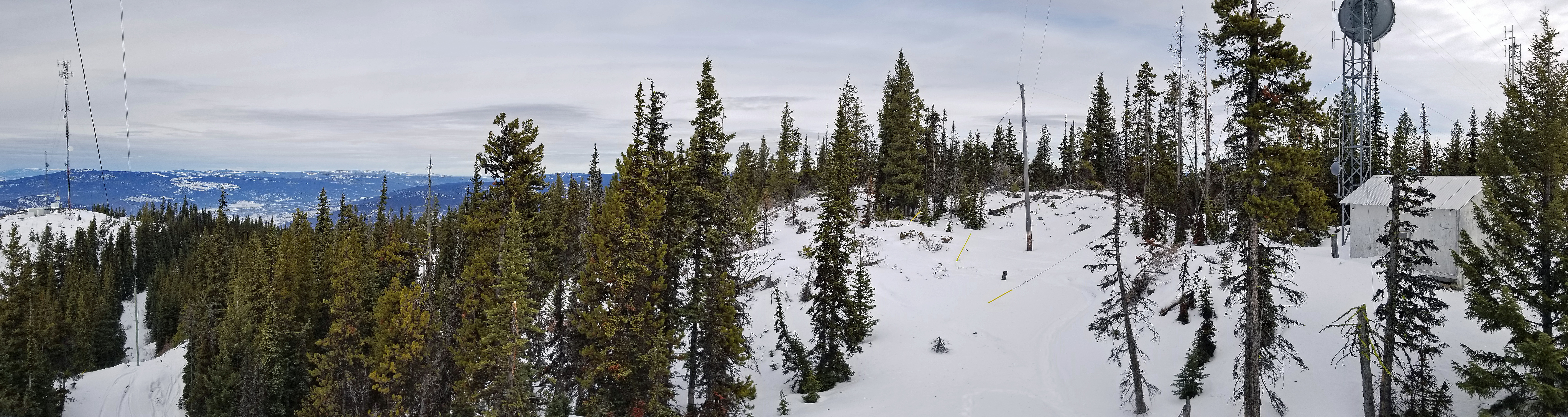
Pictures of the VE7IRN repeater site can be found here
The Greenstone mountain repeater (146.96 -600) has 2 links available. One connects the VHF repeater with the local Internet Radio Linking Project (IRLP) node (1080) and the other connects to the Salmon Arm repeater (146.76) on Fly Hills. (The link to Salmon Arm is currently inoperable due to a bad controller board)
While both links are intended to be left on for the most part they can be individually dialed up or down.
The codes for these links are set up slightly different from what has been common in this area in the past. The new code format is based on telephone prefixes. Each of the ports on the repeater is assigned a 3-digit code based on the telephone prefix of the area it connects to.
Greenstone has 3 ports; the local (VHF) port is 372, the IRLP port is 554 as the IRLP node is in North Kamloops and the Salmon Arm port is 832.
Each code has a suffix of 1 or 0 depending on whether you want the port turned on or off. In addition, because we must also send codes through the repeater to other locations, we must precede each local code with a * (star) to tell the controller that this code is for it. There are also 2 special codes that will link all ports together in a net mode or disconnect all ports.
For reference, here is a table with all the link codes for the 146.96 repeater.
| Link FROM | Link TO | Code ON | Code OFF | CW response |
| Kamloops 146.96 | IRLP | *5541 | *5540 | IRLP ON / OFF |
| IRLP | Kamloops 146.96 | *3721 | *3720 | DROP ON / OFF |
On the VHF side (146.96) you can easily tell from the courtesy tones what links are on and which are off. Each port adds its own distinctive tone to the complete courtesy tone sequence. The VHF port being always on has a short 700 Hz tone. The IRLP port has a short 1000 Hz tone and the Salmon Arm port has a short 1300 Hz tone. Therefore, when you unkey, if all you hear is a single beep, that indicates that all links are off. If you hear 2 beeps that indicates that one link is on. The frequency of the second beep will indicate which link is active. Don't worry, you will get used to the sound of the different beeps. Three beeps (sounding like a ble-e-ep), indicates that all links are on.
Additionally, transmissions originating on the link ports can be identified by a single short beep. Again there are 2 distinctive tones used for the 2 ports. The lower tone indicates the transmission originated from the IRLP port while higher tone indicates the transmission originated from the Salmon Arm link.
Remember that these codes only apply to the local repeater and its links. For a link to be complete you must also tell the device at the far end what you want to do. (The link to Salmon Arm is currently inoperable due to a bad controller board)
In the case of Salmon Arm, you must also tell the Salmon Arm repeater to connect its UHF link port to the VHF port. The codes to do this are:
#76 to capture the Salmon Arm controller followed in the same transmission by:
8321 to link the UHF link port to the VHF repeater.
To disconnect the link at the far end send #76 followed in the same transmission by:
8320 to disconnect the UHF link port from the VHF repeater.
The Internet Radio Linking Project (IRLP) uses the internet to link local VHF/UHF radio networks to other similar networks around BC and the world. As previously mentioned, the local IRLP node is accessed via the Greenstone repeater on 146.96 -600. The actual IRLP node is hosted on the VE7TSI Internet Gateway computer. The link port for the IRLP node should be up all the time but if it is not, send the appropriate code as indicated above to link the VHF port to the IRLP UHF link port.
There are more than a 1000 other nodes around the world that we can connect to with more coming on-line all the time. Imagine talking to Hams in Hawaii or Washington, DC from your handheld.
The process to access the links are as follows.
1. Identify yourself! (e.g. SAY "VE7RKA from yourcall")
2. Send *5541 (Star - five - five - four - one)
3. You should hear "IRLP ON" in CW.
4. Identify yourself again as you are now transmitting on UHF. (e.g. SAY "VE7TSI from yourcall)
5. Send the 4-digit code for the IRLP node you wish to connect to.
6. You should hear "remote_node_call, remote_node_location, Link ON". (e.g. "VE7RVN, Vernon, Link ON")
7. Call your other station and have your conversation.
To take the link down, it is just as easy.
1. First disconnect the internet link by sending the global disconnect code, 73)
2. You should hear "remote_node_call, remote_node_location, Link OFF". (e.g. "VE7RVN, Vernon, Link OFF")
3. If you have brought up the local link you can leave it up.
4. Finally sign clear.
Click here for the current status of VE7TSI.
For a complete and current list of active node calls and locations, click here .
For more information on the Internet Repeater Linking Project, please feel free to surf to http://www.irlp.net .
- 442.525+ PL100.0 located on Mt. Dufferin in Kenna Cartwright Park
- AllStarLink repeater node 520531
- For current status and information on the VE7RLO repeaters see http://allstar.karc.ca
- VoIP Autopatch (available to KARC members)
- Linked to the SIRG network
- Microwave linked to the KARC Broadband Network
- 146.960 - 600 Greenstone Mtn. Voice Repeater (5800' ASL)
- IRLP Node 1080
- Linked to Salmon Arm Fly Hills 146.76 -600 Shuswap ARC repeaters (link currently inoperable due to a failed controller board)
- APRS Tx/Rx iGate and digipeater 144.390 MHz
- Microwave linked to the KARC Broadband Network
- 448.525 -5.0 MHz Fusion (C4FM) digital repeater
- WIRES-X 33826
- Coach Hills Reservoir Kamloops (Upper Sahali area)
- Microwave linked to the KARC Broadband Network
- 147.100 +600 serving Logan Lake and a wide area (located on South Forge Mtn)
- APRS Digipeater 144.390 MHz
- AllStarLink repeater node 520533
- For current status and information on the VE7LGN repeater see http://allstar.karc.ca
- VoIP Autopatch (available to KARC members)
- Microwave linked to the KARC Broadband Network in October 2022
- 146.660 -600 Iron Mountain, Merritt BCFMCA AllStarLink repeater Node 435454 also available on Broadcastify
- APRS Digipeater 144.390 MHz
- Microwave linked to the KARC Broadband Network and VE7IRN is often linked to the VE7RLO repeater system.
- Listen to the Iron Mtn kiwiSDR receiver